
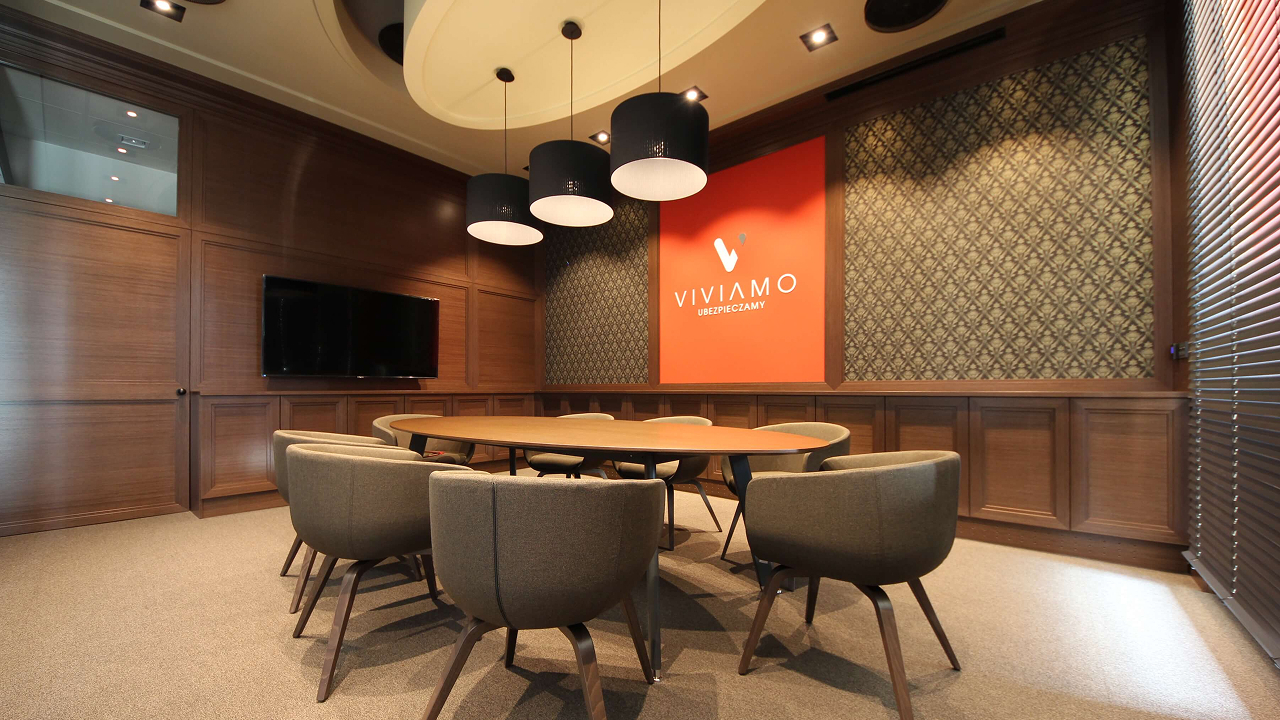
Noise has a negative effect on everyone’s health. It leads to impaired concentration, increased stress levels, insomnia problems and reduced productivity.
Sounds above 35 dB can occur in many spaces. They are especially bothersome when they interfere with learning or work. For this reason, there is more talk these days about the use of acoustic solutions that improve work quality and have a positive effect on the health of employees.
How can we improve office acoustics?
Working in an office requires a high level of concentration. To create a friendly environment for this type of activity, it is worth investing in a renovation of an existing space or a well-thought-out design for a newly created one. Key considerations include:
- planning a suitable room layout — open-plan spaces generate more noise than single or multi-person offices,
- using soundproofing materials during office renovation or finishing,
- placing accessories in the rooms — plants, paintings or other decorative elements also serve as a noise barrier,
- providing separate spaces for noise-generating equipment — it is a good idea to place photocopiers or paper shredders in a separate area.
Noise in the office — how can we eliminate it?
Noise in the office can be reduced with acoustic solutions. It is worth using systems that are appropriately tailored to the sound characteristics of a given space.
Different options work well in an office where constantly running photocopiers or shredders are a primary source of noise, while other solutions work well in a workplace where noise is generated by busy traffic in the street directly opposite the office.
To avoid excessive noise and movement, tailor specific systems to your needs and follow the tips below.
Check out our completed office projects: FitOut
Choose the right acoustic solutions for your office
The most popular acoustic solutions include:
- acoustic panels — sound-absorbing panels that block the transmission of sounds. They can be used on walls, ceilings and stairs. They are available in the form of boards, panels and mats;
- sound-absorbing panels — a type of acoustic panel that absorbs sound waves and reduces the length and intensity of sound reflections;
- acoustic diffusers — disperse sound waves;
- glazing — glass-enclosed rooms provide separate spaces in open-plan buildings. A modern office design should include a number of glass cubicles tailored to individual needs.
Properly soundproofed areas significantly improve the quality of work in the office. Elimination of noise has a positive effect on employees and improves the comfort for customers.
Well-thought-out layout of zones
The soundproofing of an office space must be carefully planned to be effective. Details such as the distance between employee cubicles and the arrangement and size of acoustic panels are important. It is also important to separate noise-generating zones from quieter ones.
The conference room should be separated from the offices, as well as from the area where noisy equipment, such as shredders, printers and photocopiers, are kept. If some employees spend most of their time on the phone, while others work in silence, these areas should be separated too. In this way, specific zones do not interfere with each other and have no negative effect on the quality of work.
Ceiling and walls — a key and often overlooked element for improving office work quality
When renovating an office, ceilings and walls are often forgotten, even though they can be useful in helping employees to concentrate. It is best to install acoustic panels on them, preventing external sounds from reaching the office.
These items can also prevent noise from escaping the room. If you forget about the ceilings or walls, even a comprehensively reorganized office space cannot provide effective protection against noise.
Soft, porous materials in office spaces
In principle, every material absorbs sound, but soft and porous structures have excellent sound-absorbing properties. Smooth ones will not be as effective. When choosing specific acoustic panels, it is worth paying attention to their structure and their suggested sound absorption coefficients.
Sound-absorbing walls in a modern office design
Using sound-absorbing walls is effective wherever it is not possible to divide the space into separate offices. Such elements dampen noise, such as telephone conversations and other noise naturally generated by employees, such as computer use.
Adjacent desks, despite their close proximity, can be clearly separated by sound-absorbing screens, which help improve employee productivity and provide them with adequate privacy.
Acoustic cubicles for open-plan offices
Acoustic cubicles are a more advanced solution than sound-absorbing walls and are recommended for open-plan spaces. Such items can be used to create small office spaces where the people who are responsible for direct contacts with customers or for negotiating details of important orders can work.
Spaces of this type can be used primarily for conversations and consultations, or they can be assigned to specific employees.
Effective soundproofing of an office space to suit the needs of a modern company
Office acoustics are crucial for employee productivity. It is a good idea to take care of office acoustics when designing or renovating your office space or selecting specific solutions to meet your needs.
If you need professional support in designing and creating acoustic elements for a modern office, check out the services of DM Building, a company operating in Warsaw, Gdynia and the surrounding area!
Its employees specialize in space fit-out services. They can help you to design your office infrastructure to fully meet the requirements concerning safe and efficient work.

